

Spanish SFST
Screenshots



ASO analysis
Good use of the title field.
Solid length. Make sure the first 252 chars hook the reader.
Used by similar apps in your niche, but not in your title or description. Adding these (where genuinely relevant) can broaden your search reach.
Words you and your peers both use. Confirms positioning in this niche.
Keyword rankings
iTunes Search · top 200About
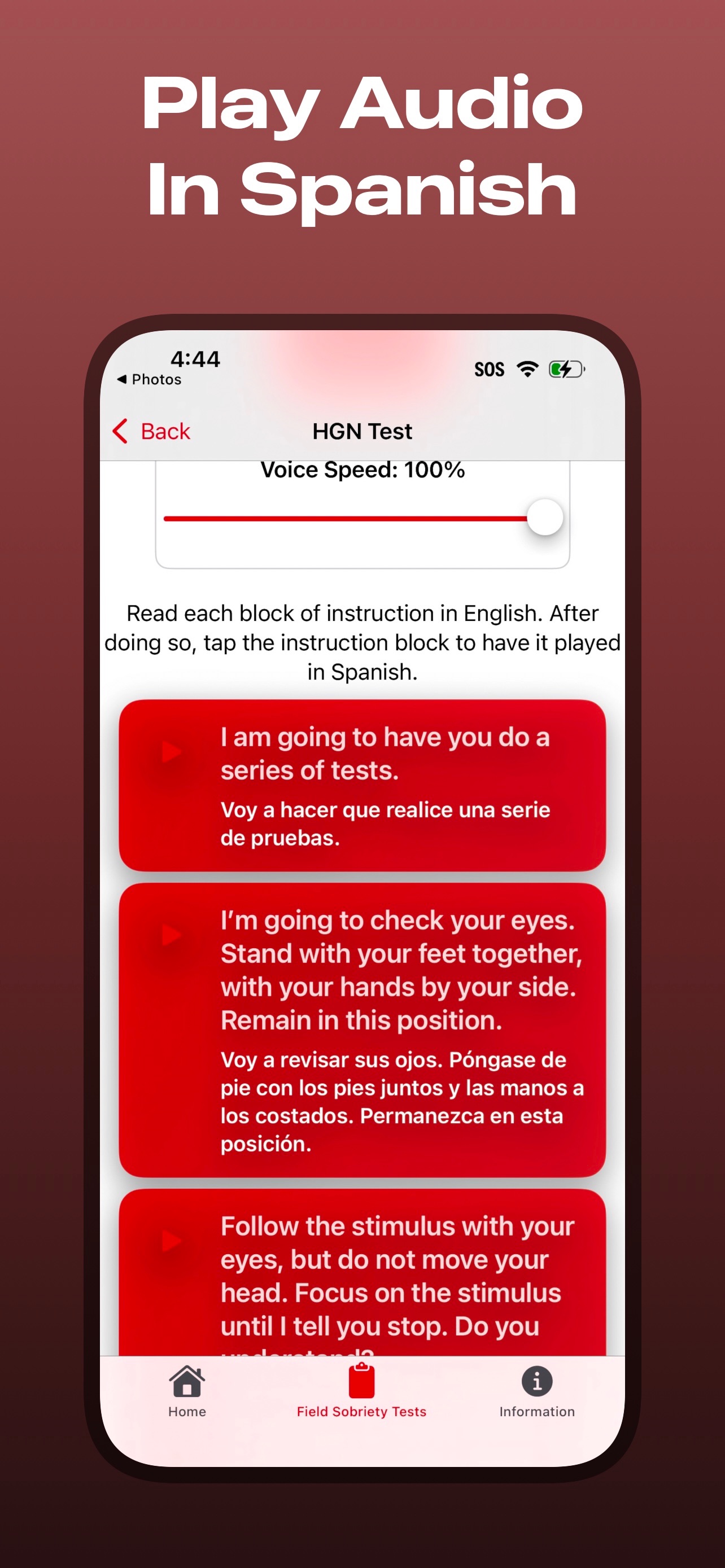
Spanish SFST is a practical, reliable tool built to help law enforcement officers administer Standardized Field Sobriety Tests (SFST) in Spanish. By delivering clear, accurate translations, the app bridges language barriers, supports effective communication, and ensures fair, consistent testing in diverse communities. Officers can easily play spoken instructions aloud in Spanish, providing clarity for individuals being tested while maintaining accuracy in the process. With streamlined navigation and step-by-step guidance, Spanish SFST covers every component of the field sobriety tests. Key features include: - Audio prompts for each instruction - Spanish Miranda warning FAQ section to address common questions Whether used during roadside assessments or in training, Spanish SFST empowers officers with the tools they need to conduct sobriety testing with confidence, efficiency, and fairness. Case law supporting the usage of this app: Wisconsin v Alejandro Herrera Ayala: The Wisconsin Court of Appeals addressed the admissibility of SFSTs administered in Spanish. The court found that the SFSTs were administered properly according to NHTSA guidelines. It was established that Ayala understood the instructions given in Spanish, and there was no evidence suggesting that the language of administration had compromised the reliability of the tests. Therefore, the court upheld the admissibility of the SFST results, highlighting that proper procedural compliance and the suspect’s comprehension were the key factors, not the specific language used. United States v. Horn: This case highlights the importance of administering SFSTs in strict accordance with NHTSA standards, focusing on the scientific reliability and proper execution of the tests rather than the language used. It serves as an example where adherence to standardized procedures can validate test results in any language, including Spanish. Rodriguez v. Texas (2013): This case involved the admissibility of SFSTs, emphasizing that the proper administration of the tests according to established protocols is crucial. The language of administration, including Spanish, does not impact the admissibility as long as the tests are conducted correctly.


